
 +8613003178786
 sales@lingyufab.com
How to Source Precision Sheet Metal Fabrication
22
Nov 2026
Choose a Supplier That Can Support the Full Part Requirement
Before sending an RFQ, buyers should confirm more than whether a supplier can cut and bend metal. The expensive sourcing mistakes usually come from missing information about tolerances, material documentation, installed hardware, finishing acceptance, or assembly responsibility.
For repeatable custom parts, precision sheet metal fabrication should be sourced as a controlled manufacturing scope rather than a collection of separate operations. A bracket, control box, chassis, or enclosure may require laser cutting, CNC bending, welding, fastener installation, surface finishing, and final dimensional inspection. If these steps are split among multiple vendors, responsibility for fit-up issues can become unclear.
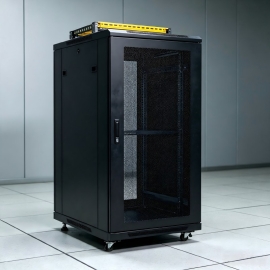
Lingyufab, also known as Shanghai Lingyu Industry, has specialized in sheet metal and fastener manufacturing since 2003. Our scope includes sheet metal products, enclosures and cabinets, control boxes, server racks, brackets, mounting plates, chassis, frames, front panels, bezels, heat sinks, automotive parts, and integrated assemblies. Buyers evaluating Enclosure Chassis Assemblies can therefore assess one supplier for both fabricated components and related assembly needs.
The right supplier fit depends on the work package:
| Buyer requirement | Supplier capability to verify | Why it matters | When it may not apply |
|---|---|---|---|
| Flat parts with cutouts, slots, and profiles | Laser cutting capability and drawing interpretation | Part geometry and hole locations begin with the flat pattern. | Not the only concern when the component includes bends, welded joints, or hardware. |
| Brackets, frames, and formed panels | CNC bending, press brake forming, and bend tolerance control | Bend angles and flange dimensions determine whether the part fits its mating assembly. | Less relevant for fully flat stamped washers or simple laser-cut blanks. |
| Welded housings or structural assemblies | TIG/MIG welding scope, fixture needs, and inspection requirements | Welding can affect distortion, appearance, and downstream assembly alignment. | Not required for components joined by screws, clinching, or bolts. |
| Electrical or equipment enclosures | Material selection, finishing definition, installed hardware, and assembly scope | Function often depends on access panels, grounding features, threaded points, and repeatable fit. | May be unnecessary for a single non-enclosure bracket. |
At Lingyufab, in-house laser cutting, CNC bending, stamping, TIG/MIG welding, finishing, and assembly reduce handoffs between fabrication stages. This model is relevant when procurement wants one accountable source for custom parts and assembled metalwork. It is not a substitute for the buyer defining the intended use, mating conditions, drawing revision, and acceptance criteria.
For parts that need formed geometry, buyers can also review our Leading Sheet Metal Bending Service Manufacturer capability before deciding whether the required bend profile fits the manufacturing route.
Use a Pre-RFQ Sourcing Checklist Before Comparing Quotations
A lower quotation is not automatically a lower total cost. It may exclude finishing, material certificates, hardware installation, inspection records, packaging requirements, or clarification work that another supplier has already included. The practical solution is to issue the same defined package to every shortlisted supplier.
The following pre-RFQ checklist is designed for buyers sourcing repeatable sheet metal parts, fabricated enclosures, and assemblies.
| RFQ item | What to provide or request | Reasoning and suitable scenario | Limit or decision point |
|---|---|---|---|
| Drawings and revision control | Provide a controlled PDF drawing, revision level, part number, quantity, and any available 3D model. | Best for all custom parts. It prevents suppliers from pricing different revisions or interpreting dimensions from an obsolete file. | A 3D model helps clarify geometry but should not replace the controlled drawing where inspection dimensions are required. |
| Tolerances | Identify critical dimensions, hole positions, bend features, flatness needs, and datum references. | Use this when a part interfaces with electronics, fixtures, doors, rails, or another fabricated component. Lingyufab can address tight tolerances down to ±0.05mm where the drawing and process allow. | Do not apply ±0.05mm to every dimension by default. Tighter requirements can add process controls and cost without improving product function. |
| Material traceability | State material grade, thickness, temper or condition if applicable, and whether Mill Test Certificates are required. | Appropriate for controlled industrial builds, regulated purchasing requirements, and projects that need batch accountability. Lingyufab provides MTC traceability for every batch. | Material certificates do not define finished-part dimensions; inspection evidence is still needed. |
| Finishing | Specify the finish type, color where relevant, cosmetic surface expectations, masking areas, and protected functional surfaces. | Needed for visible panels, outdoor enclosures, contact surfaces, and customer-facing equipment housings. | Do not leave finish approval to a generic “standard” description if color, texture, or surface appearance affects acceptance. |
| Inspection evidence | State whether you need dimensional records, visual inspection confirmation, first-piece approval, photos, or other documented evidence. | Useful for parts with defined critical features or buyer quality documentation requirements. Lingyufab performs 100% dimensional and visual inspection before shipment. | Agree on the exact report format before order release; “inspection report” can mean different records to different buyers. |
| Hardware and assembly | List every screw, nut, stud, washer, clinch feature, weld nut, or subassembly operation. | Suitable when the delivered item must be ready for installation rather than supplied as separate loose components. | Confirm torque, orientation, thread protection, and supplied-versus-installed status when those details affect use. |
| Packaging and shipping condition | Identify scratch protection, part separation, labeling, kit quantities, and any export packing requirements. | Appropriate for finished panels, coated surfaces, and assemblies with loose hardware. | Packaging cannot correct an unspecified cosmetic acceptance standard. |
A useful rule is simple: if a condition can cause rejection at incoming inspection or during final assembly, include it in the RFQ. This applies especially to mounting points, grounding areas, mating flanges, externally visible surfaces, and threaded hardware.
Match Materials and Manufacturing Processes to the Part Function
Material selection should begin with the operating environment, structural need, corrosion expectation, appearance, and joining method. Procurement teams should avoid asking suppliers to “recommend a material” without explaining the use condition. A suitable material for an indoor mounting plate may not suit an enclosure exposed to moisture or a component that must mate with stainless fasteners.
Lingyufab processes carbon steel, stainless steel including 304 and 316 grades, and aluminum. Each option should be linked to a clear functional requirement.
| Material option | Typical sourcing fit | RFQ details to define | Limit to consider |
|---|---|---|---|
| Carbon steel | Structural brackets, frames, chassis, and general fabricated components where coating or another specified finish is part of the design. | Grade, thickness, finish requirement, weld locations, and cosmetic requirements. | Material selection should account for the intended exposure condition and finish system. |
| Stainless steel 304 | Equipment housings, panels, brackets, and assemblies requiring stainless material specified by the buyer. | 304 grade, surface condition, visible versus non-visible faces, weld appearance, and any required material documentation. | Do not assume a stainless designation alone defines all surface or appearance requirements. |
| Stainless steel 316 | Projects whose engineering documents specifically require 316 stainless steel. | 316 grade, traceability requirement, finish, and controlled dimensions around mating features. | Use it when specified by design or application requirements, not as a default upgrade without approval. |
| Aluminum | Lightweight panels, heat-related components, front panels, bezels, and application-specific enclosures. | Alloy or buyer-specified material condition, thickness, finish, bend details, and cosmetic face designation. | Confirm the required joining and finishing approach before comparing supplier quotations. |
Process selection follows the same discipline. Laser cutting suits profiles, holes, and cutouts; CNC bending forms flanges and controlled angles; stamping can support applicable production needs; TIG or MIG welding supports specified joints; and finishing should be clearly defined as part of the finished-part requirement. For formed parts with cutouts and installed features, Pre Installed Hardware And Sub Assemblies may reduce receiving and assembly work at the buyer’s facility.
For example, a control-box door may require a laser-cut outer profile, openings for switches or displays, bent return flanges, and installed threaded hardware. The RFQ should identify which face is cosmetic, which dimensions locate the door to the box, and which holes require threads or hardware. Without those details, two suppliers can quote apparently similar parts while planning materially different deliverables.
Verify Quality Evidence, Traceability, and Supplier Accountability
Quality claims should be converted into evidence requests. The buyer should ask what documentation accompanies the order, what inspection is performed before shipment, and what happens if a manufacturing defect is found. This is more useful than relying on a general quality statement.
Lingyufab operates under ISO 9001:2015 and ISO 14001 certifications and holds TÜV CE certification. As a Mitsubishi Electric certified core supplier, we follow strict Japanese quality standards in manufacturing. These credentials are relevant to buyers looking for a documented quality-management basis; they do not remove the need to define the specific inspection and acceptance evidence for each RFQ.
- For traceable material: request the required grade and MTC requirement on the purchase order. Lingyufab provides full material traceability with Mill Test Certificates for every batch.
- For critical dimensions: mark them on the drawing and explain the mating function. This allows the supplier to assess whether the requested tolerance, including requirements down to ±0.05mm, is applicable.
- For appearance-sensitive parts: define the visible face and acceptance criteria before production. Visual inspection alone cannot resolve an undefined cosmetic standard.
- For manufactured assemblies: list supplied hardware, installed hardware, weld locations, and verification points. This is especially relevant for Custom Electrical Control Boxes and other multi-part fabricated units.
- For defect responsibility: document the agreed acceptance criteria. Lingyufab offers free replacement or repair where quality issues result from manufacturing defects.
Buyers should distinguish between material traceability and product traceability. A material certificate identifies the material batch. A dimensional record or visual inspection result relates to the manufactured part. Complex or high-value components may require both forms of evidence.
Compare Total Sourcing Cost Instead of Piece Price Alone
The quoted unit price is only one part of procurement cost. A supplier that performs fabrication, installed hardware, and assembly under one manufacturing scope can reduce internal handling and coordination. Lingyufab’s in-house vertical integration is designed to reduce overall costs by 15–20% by reducing intermediaries and extra logistics. This is most relevant for multi-operation parts or assemblies; a simple flat blank may not produce the same cost effect.
| Cost factor | Question to ask during quotation review | Potential sourcing effect |
|---|---|---|
| Fabrication scope | Does the quote include laser cutting, bending, welding, and finishing where required? | Prevents a low initial price from excluding necessary operations. |
| Hardware installation | Are nuts, screws, studs, or related fasteners supplied loose or installed? | Changes receiving labor, line-side handling, and assembly time. |
| Quality documentation | Are MTCs, inspection records, or other agreed evidence included? | Reduces uncertainty when incoming inspection requires proof of conformity. |
| Logistics handoffs | Will parts move among separate cutting, bending, welding, and assembly vendors? | More handoffs can add freight, scheduling effort, and responsibility gaps. |
| Prototype and production terms | Can the supplier support a prototype, pilot run, and later production volume? | Reduces the work of qualifying a new source when the project advances. |
Lingyufab has no MOQ for prototyping phases, from a one-piece prototype through a 100-piece pilot run and mass production. Standard samples typically take 7–10 days, while bulk production typically takes 20–30 days. For urgent requirements, rapid delivery within 48 hours is available for applicable urgent orders. Buyers should confirm whether their geometry, finishing, quantity, and documentation needs fit the requested timing rather than treating any lead time as automatic.
For ongoing production, capacity also matters. Lingyufab delivers more than 8,000 fasteners and metal sheet assemblies monthly. This is useful evidence for buyers assessing a supplier’s ability to support repeat orders, although it should not replace a project-specific capacity and schedule discussion.
Shortlist Suppliers With a Controlled Qualification Procedure
A structured shortlist avoids spending engineering time on quotations that cannot meet the real drawing or documentation requirement. Use the following procedure for brackets, chassis, enclosures, control boxes, and other repeatable fabricated parts.
- Classify the part. Identify whether the item is a flat part, bent component, welded assembly, enclosure, chassis, or installed-hardware assembly. This determines which processes must be verified.
- Mark functional features. Highlight dimensions that affect fit, mounting, access openings, airflow paths, grounding points, and mating interfaces. Specify tolerances only where function requires them.
- Define the material package. State carbon steel, 304 stainless steel, 316 stainless steel, aluminum, or the approved material requirement. Add MTC needs where traceability is required.
- Define the completed delivery condition. Clarify whether parts are supplied flat, formed, welded, finished, hardware-installed, or fully assembled.
- Request equivalent quotations. Send one controlled RFQ package to each supplier and ask them to identify exceptions, assumptions, and excluded operations.
- Review evidence before price ranking. Confirm certifications, quality records, inspection scope, capacity fit, and lead-time assumptions before selecting on commercial terms.
- Agree acceptance criteria before release. Confirm drawing revision, finish acceptance, inspection evidence, packaging, delivery terms, and responsibility for manufacturing defects.
This procedure fits procurement teams preparing supplier shortlists for industrial automation, automotive, energy, communications equipment, and similar OEM applications. It is less necessary for standard catalog hardware with no custom fabrication requirement. Where standard hardware is part of the assembly, buyers can also source related Fasteners alongside fabricated components when the specification permits.
For a focused sourcing review, submit your drawings, required material grade, target quantity, finish requirements, tolerance callouts, and requested inspection evidence to request a quote from Lingyufab.

