+8613003178786
  sales@lingyufab.com



Industrial Machinery Enclosures: Custom Sheet Metal Solutions
13
Aug’2026Industrial Machinery Enclosures: Custom Sheet Metal Solutions
Machinery enclosures are critical components in industrial environments, protecting sensitive equipment from dust, moisture, vibration, and mechanical damage. Have you ever walked through a factory floor and noticed the robust metal housings surrounding heavy machinery, control systems, or production line equipment? These enclosures are not just simple covers—they are precision-engineered structures that must withstand harsh conditions while providing accessibility, safety, and long-term durability. A poorly designed enclosure can lead to equipment failure, safety hazards, and costly production downtime.
At Lingyufab, we understand the demanding requirements of industrial machinery enclosures. With over 20 years of precision manufacturing experience since 2003 and certification as a core supplier for Mitsubishi Electric, our sheet metal fabrication capabilities—combining laser cutting, CNC bending, welding, and assembly—are engineered to deliver durable, reliable, and cost-effective enclosure solutions for a wide range of industrial applications. This guide explains what custom machinery enclosures are, the key manufacturing processes, critical design considerations, and how to choose the right partner for your project.
What Are Custom Machinery Enclosures?
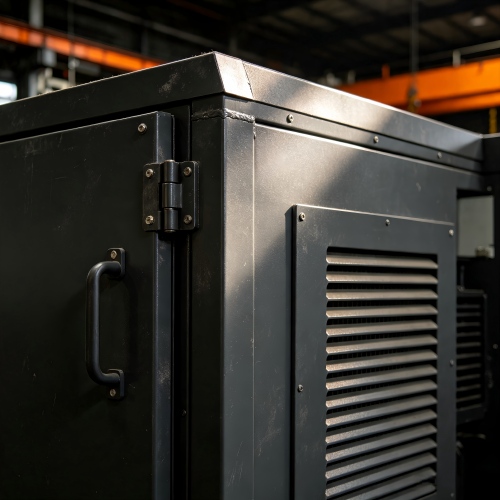
A machinery enclosure is a protective housing that surrounds industrial equipment, control systems, or production machinery. Unlike standard enclosures for consumer electronics, industrial machinery enclosures must withstand demanding operating conditions—extreme temperatures, vibration, moisture, dust, chemicals, and physical impact.
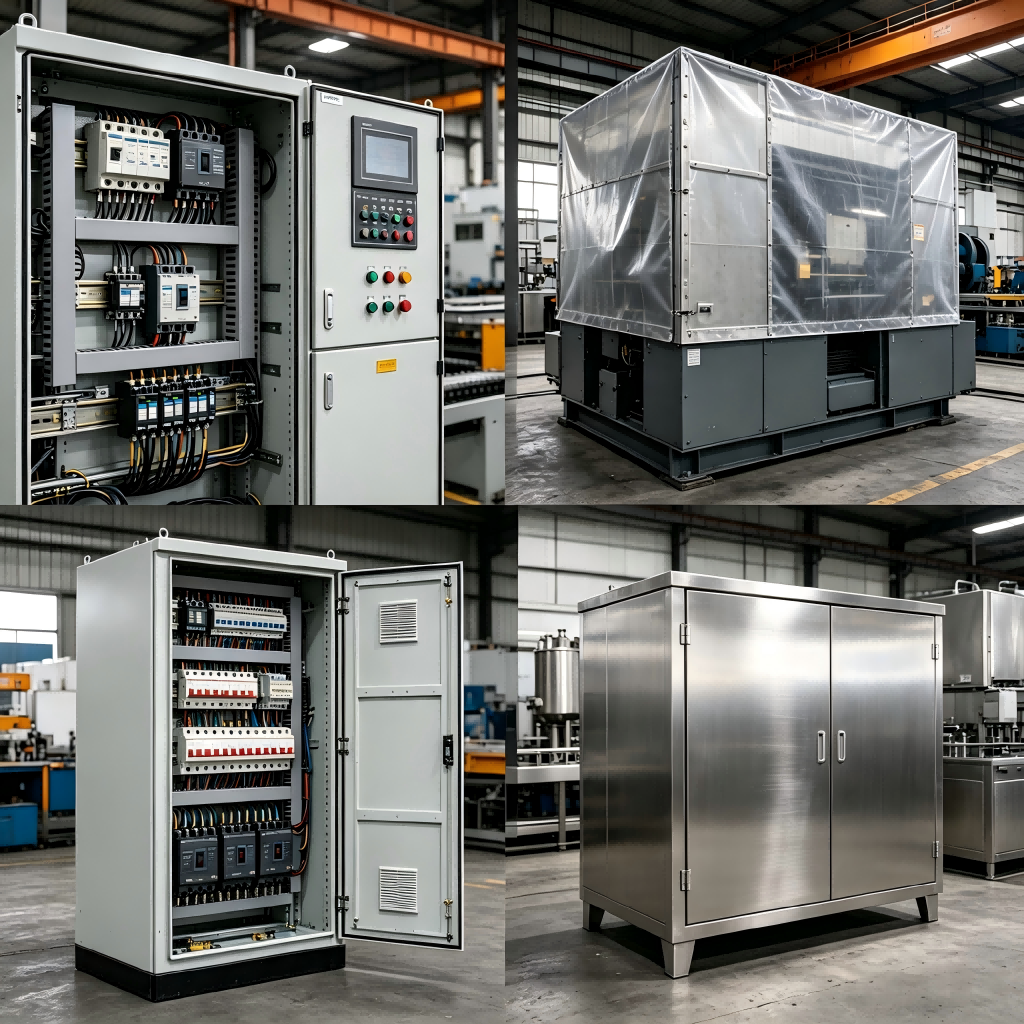
Typical machinery enclosures include control cabinets that house PLCs and electrical components; machine guards that protect operators from moving parts; equipment shrouds that cover large machinery to contain noise, chips, and coolant; operator stations that integrate displays and controls for production line monitoring; and power distribution enclosures that protect electrical systems in industrial facilities.
These enclosures are typically constructed from sheet metal components such as base plates, side panels, doors, and top covers—precisely cut, formed, welded, and assembled into rigid structures that provide both protection and accessibility. The complexity of modern industrial machinery requires enclosures that balance structural integrity, thermal management, electromagnetic compatibility (EMC) shielding, and maintainability.
How Are Custom Machinery Enclosures Manufactured?
The journey from raw sheet metal to a finished machinery enclosure involves a carefully orchestrated sequence of manufacturing steps, each critical to the final performance and durability of the product.
Design and Engineering Review. The process begins with a thorough engineering review of your 3D CAD models and 2D drawings. Our engineering team assesses the design for manufacturability (DFM), identifying potential issues with material selection, bend radii, tolerances, and assembly sequence. For industrial machinery enclosures, critical considerations at this stage include compliance with IP protection ratings (IP54, IP65, IP66, etc.), structural reinforcement for heavy equipment, thermal management requirements, access points for maintenance and operation, and mounting and installation requirements.
Material Selection. Material choice is critical for machinery enclosure performance. Common materials include cold-rolled steel (SPCC/SECC) for cost-effective structural rigidity; galvanized steel (SGCC) for enhanced corrosion resistance; stainless steel (304, 316) for demanding environments requiring corrosion resistance and hygiene; and aluminum alloys (5052, 6061) for lightweight applications requiring good thermal conductivity. Typical material thickness for heavy industrial enclosures ranges from 1.5mm to 3.0mm.
Laser Cutting and Material Preparation. High-precision fiber laser cutting is used to create the flat patterns for each enclosure component—base plates, side panels, doors, and structural reinforcements. For machinery enclosures, the accuracy of cutouts for ventilation, cable entry, and component mounting directly affects assembly fit and equipment performance. Critical dimensions are typically held to precise tolerances.
CNC Bending and Forming. After cutting, flat blanks are formed into their final 3D shapes using CNC bending. For machinery enclosures, precision bending ensures that mounting flanges, door frames, and structural reinforcements are formed to exact angles and dimensions. Heavy-gauge materials often require specialized tooling and higher tonnage presses.
Welding and Assembly. For enclosures requiring permanent joints—such as heavy-duty frames or sealed housings—welding is used to join components. Depending on the design and material, TIG welding for stainless steel, MIG welding for general fabrication, or spot welding for thin sheet connections may be employed. Welding must be carefully controlled to prevent distortion and ensure structural integrity. For applications requiring sealed seams, stitch welding or continuous seam welding is used to achieve IP-rated protection.
Hardware and Fastener Installation. Industrial machinery enclosures require numerous hardware attachments: heavy-duty hinges for access doors, quarter-turn latches and locks for secure closure, mounting brackets for floor or wall installation, cable entry glands and strain reliefs, and internal mounting rails for equipment installation.
Surface Treatment and Finishing. The finished enclosure undergoes surface treatment to enhance corrosion resistance, appearance, and durability. Common finishes include powder coating for durable, professional finishes in a wide range of colors; galvanizing for superior corrosion protection in harsh environments; and stainless steel passivation for bare stainless enclosures.
Key Design Considerations for Industrial Machinery Enclosures
Structural integrity. Industrial enclosures must withstand vibration, impact, and heavy loads. Reinforced frames, internal ribs, and strategic brace placement are essential for structural rigidity.
Environmental protection. IP protection ratings define the enclosure's resistance to solids and liquids. IP54 offers limited dust and splash protection, IP65 offers dust-tight and water-jet protection, while IP66 offers dust-tight and powerful water-jet protection. Specifying the correct IP rating for your operating environment is essential.
Thermal management. Industrial equipment generates significant heat. Enclosures must provide adequate ventilation, heat dissipation, and sometimes active cooling to maintain safe operating temperatures.
Accessibility and maintainability. Equipment must be accessible for maintenance, repair, and operation. Large doors with robust hinges, removable panels, and clear labeling are essential for maintainability.
Corrosion resistance. Industrial environments often expose enclosures to moisture, chemicals, and corrosive substances. Material selection and surface finishing must provide adequate corrosion protection.
Common Applications for Custom Machinery Enclosures
Custom machinery enclosures are essential across a wide range of industrial applications:
Automation and Control Systems. PLC cabinets, control panels, and industrial PC enclosures that house sensitive electronics in factory environments.
Heavy Machinery and Equipment. Machine guards, equipment shrouds, and protective housings for large-scale industrial machinery.
Power Distribution and Electrical Systems. Switchgear enclosures, transformer housings, and electrical cabinets that protect power distribution equipment.
Food and Beverage Processing. Stainless steel enclosures that meet hygiene standards and withstand wash-down procedures.
Renewable Energy Systems. Enclosures for solar inverters, wind turbine controls, and battery storage systems.
How Lingyufab Delivers Custom Machinery Enclosures
Lingyufab is a professional sheet metal fabrication manufacturer and sheet metal supplier based in Shanghai, China, with over 20 years of precision manufacturing experience since 2003. We follow strict Japanese quality standards and are a certified core supplier for Mitsubishi Electric.
What sets Lingyufab apart as a sheet metal supplier is our integrated approach to machinery enclosure manufacturing. We handle every step of the process in-house—from laser cutting and CNC bending to welding, assembly, and surface treatment—ensuring consistent quality, shorter lead times, and single-point accountability.
Our in-house capabilities include:
Laser cutting — High-precision fiber laser cutting for accurate flat patterns, clean edges, and minimal material waste.
CNC bending — Precision bending with consistent accuracy and springback compensation.
Welding — TIG welding for stainless steel, MIG welding for general fabrication, and spot welding for thin sheet connections.
Sheet metal fabrication — Complete assembly, surface treatment, and fastener installation.
Surface treatment — In-house powder coating, galvanizing, anodizing, electroplating, and polishing.
ISO 9001, ISO 14001, and TÜV CE certified — Full material traceability with Mill Test Certificates.
One supplier, full responsibility. From laser cutting and CNC bending to welding, surface treatment, and fastener installation, we handle everything under one roof. This integration ensures consistent quality, shorter lead times, and a single point of accountability for your entire project.
If you are developing custom machinery enclosures for industrial applications, our engineering team is available to review your requirements and provide a free consultation. We'll help you optimize your design for manufacturability, durability, and cost-effectiveness. If you are looking for a reliable sheet metal fabrication supplier for your next industrial enclosure project, please don't hesitate to contact us.
Quick Machinery Enclosure Checklist for Buyers
| What to Check | What to Consider |
|---|---|
| IP protection rating | IP54, IP65, IP66, or higher—specify based on operating environment |
| Material selection | Steel, galvanized steel, stainless steel, or aluminum—each has different corrosion and cost properties |
| Structural requirements | Will the enclosure need to withstand vibration, impact, or heavy loads? |
| Accessibility | Does the design provide adequate access for maintenance and operation? |
| Thermal management | Is ventilation or active cooling required? |
| Corrosion protection | Is powder coating, galvanizing, or stainless steel required for the environment? |
FAQs
Q1: What materials are commonly used for industrial machinery enclosures?
Cold-rolled steel (SPCC/SECC) is the most common material for cost-effective structural rigidity. Galvanized steel (SGCC) offers enhanced corrosion resistance. Stainless steel (304, 316) is preferred for demanding environments requiring corrosion resistance and hygiene. Aluminum alloys (5052, 6061) are used for lightweight applications. Typical material thickness ranges from 1.5mm to 3.0mm for heavy industrial enclosures.
Q2: What IP protection rating should I specify for my machinery enclosure?
The required IP rating depends on the operating environment. IP54 is suitable for limited dust and splash protection. IP65 offers dust-tight and water-jet protection. IP66 offers dust-tight and powerful water-jet protection. For wash-down environments, IP66 or higher is typically required.
Q3: Why is structural integrity important for machinery enclosures?
Industrial enclosures must withstand vibration, impact, and heavy loads while maintaining protection for the equipment inside. Reinforced frames, internal ribs, and strategic brace placement are essential for structural rigidity and long-term durability.
Q4: What surface finishes are available for machinery enclosures?
Common surface finishes include powder coating for durable, professional finishes in a wide range of colors; galvanizing for superior corrosion protection in harsh environments; and stainless steel passivation for bare stainless enclosures. The choice depends on the operating environment and aesthetic requirements.
Q5: Can Lingyufab handle both prototypes and high-volume production?
Yes. Lingyufab supports everything from single prototypes to full mass production. Our flexible manufacturing approach allows us to scale production up or down based on your needs.
Q6: What file formats do you accept for machinery enclosure projects?
We accept 3D files in STEP (.stp), IGS (.igs), and SolidWorks (.sldprt) formats, and 2D drawings in PDF, DWG, and DXF formats. For machinery enclosure projects, we also need IP rating requirements, material specifications, and any specific certification or performance requirements.