+8613003178786
  sales@lingyufab.com



What Is Metal Stamping? A Complete Guide to High-Volume Sheet Metal Forming
21
Aug’2026What Is Metal Stamping? A Complete Guide to High-Volume Sheet Metal Forming
Have you ever wondered how automotive body panels, electronic connectors, or appliance housings are produced by the thousands—each one identical to the last—at incredible speed? Or perhaps you have a part design that requires high-volume production, but you are unsure whether stamping is the right manufacturing process for your project? These are common questions faced by design engineers, procurement professionals, and product managers. Metal stamping is one of the most widely used manufacturing processes in the world, yet many buyers and engineers are unfamiliar with how it works, its capabilities, and its limitations.
At Lingyufab, we offer metal stamping alongside laser cutting, CNC bending, and other fabrication services. With over 20 years of precision manufacturing experience since 2003 and certification as a core supplier for Mitsubishi Electric, we understand the strengths and limitations of stamping and when it is the right choice for your project. This guide explains what metal stamping is, how it works, its key advantages, common applications, and what to consider when choosing stamping for your sheet metal parts.
What Is Metal Stamping?
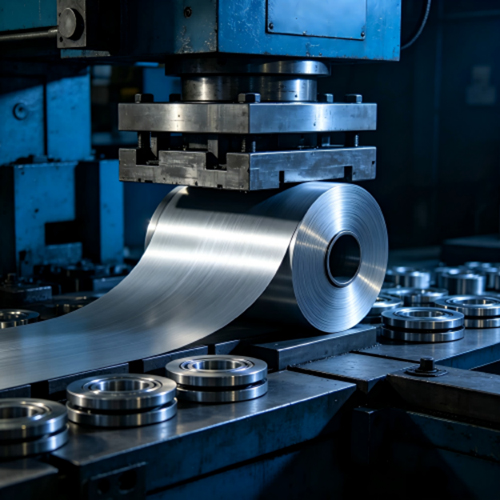
Metal stamping, also known as pressing, is a cold-forming manufacturing process in which flat sheet metal—in coil or blank form—is placed into a stamping press, where a specialized tool called a die applies immense pressure to cut, bend, or form the material into a desired shape. The process relies on custom tooling mounted inside the press, typically consisting of a punch (the upper part) and a die (the lower part) that come together to transform flat metal into finished components.
Unlike machining processes that remove material to create a part, stamping reshapes the material without removing it—it is a deformation process that preserves the metal's original temper and structural integrity. Because the tooling is purpose-built for each part geometry, stamping can produce identical parts with tight dimensional consistency over millions of cycles.
Stamping is primarily used to produce high volumes of sheet metal parts quickly and cost-effectively. Once the tooling is built, a stamping press can produce dozens to hundreds of identical parts per minute, making it the preferred choice for industries that require large quantities of consistent, precision metal components.
How Does Metal Stamping Work?
The metal stamping process follows a systematic sequence of steps, from material preparation to the finished part. Understanding this workflow helps buyers and engineers make informed decisions about whether stamping is the right process for their project.
Material Feeding
The process begins with sheet metal in the form of coils or flat blanks. In high-volume operations, coiled sheet metal is continuously fed into the stamping press, allowing for uninterrupted production. The material is fed through the press in precise increments, controlled by the press's feeding system.
Die Design and Tooling
A stamping die is a special, one-of-a-kind precision tool that cuts and forms sheet metal into a desired shape or profile. The die consists of two primary components: the upper die (containing the punch) and the lower die (die block). The punch is the moving part that applies force to the metal, while the die supports the material and provides the shape for the resulting form.
Dies are typically made from special types of hardenable steel called tool steel and are designed to withstand millions of cycles. The upfront cost to create a die can be significant, but that one-time expense is spread across large production runs, lowering the cost per part.
Stamping Operations
In a single press stroke, the ram moves the upper die down toward the lower die, applying immense pressure to the sheet metal. The type of operation is generally categorized by its primary action:
· Blanking — Cutting the complete outer shape of the part from the sheet stock. The cut-out piece is the finished part, and the surrounding material is scrap.
· Piercing or Punching — Cutting internal holes or features, with the material removed being scrap and the remaining material becoming the part.
· Forming — Permanently deforming the material without shearing, such as bending or drawing, to create three-dimensional shapes.
Part Removal and Secondary Operations
After stamping, the finished part is removed from the press. Depending on the part design, secondary operations may be required, such as deburring, cleaning, plating, welding, or assembly. Because stamping produces clean, consistent edges, parts are often ready for immediate secondary assembly.
Types of Metal Stamping Processes
Metal stamping encompasses several distinct methods, determined by the part's geometry and complexity:
· Progressive Die Stamping — This is the most common high-volume stamping process. Coiled sheet metal is fed through a series of stations within a single die, with each station performing a different operation (piercing, blanking, forming, etc.). The part is progressively formed as it moves from station to station, and the finished part is separated from the carrier strip at the final station.
· Transfer Die Stamping — In transfer stamping, the part is moved from one die station to another using mechanical transfer systems. This process is suitable for larger parts that cannot be easily handled in a progressive die.
· Fine Blanking — A high-precision shearing technique that uses tight punch-to-die clearances and a specialized triple-action press to produce a smooth, fracture-free edge over the entire material thickness. Fine blanking is used for parts requiring extremely clean edges and tight tolerances.
· Deep Drawing — Used to create seamless, cup-shaped, or hollow parts from flat sheet metal. Deep drawing requires multiple draw stages and controlled material flow to prevent tearing or wrinkling. It is commonly used for automotive body panels, battery enclosures, and other deep-formed components.
· Bending and Forming — Bending creates angles (V, U, or channel shapes) by deforming material along a straight line. Forming reshapes sheet metal without removing material, permanently deforming it into a desired shape—often used for creating ribs, flanges, or curved contours without altering thickness significantly.
· Embossing and Coining — Embossing creates raised or recessed features by stretching the material. Coining is a high-pressure forming method that compresses the material to achieve extreme dimensional accuracy, often resulting in a significant thickness change.
Key Advantages of Metal Stamping
Metal stamping offers several distinct advantages that make it the preferred choice for high-volume sheet metal production:
· High Production Speed — Once the tooling is built, stamping presses can produce dozens to hundreds of parts per minute. Progressive tools running from a coil can yield dozens to over one hundred parts per minute, with rates much higher in high-speed applications. This speed translates to lower per-unit costs at scale.
· Low Per-Unit Cost — While the upfront tooling cost is significant, that one-time expense is spread across large production runs, dramatically lowering the cost per part. For high-volume production, stamping is one of the most cost-effective manufacturing methods available.
· High Material Utilization — Stamping uses flat sheet metal efficiently, minimizing waste. Blanking operations cut parts from the sheet with minimal scrap, and progressive dies optimize material usage by nesting parts closely together.
· Consistent Quality and Repeatability — Stamping produces identical parts with tight dimensional consistency over millions of cycles. Once the tooling is set up, every part is virtually identical to the last, reducing quality variation and assembly issues.
· Dimensional Accuracy — Stamping achieves tight tolerances, typically within ±0.002" to ±0.005" for many applications, depending on material, part geometry, and tooling design. For critical features, precision stamping can hold even tighter tolerances.
· Preserves Material Properties — Stamping is a cold-working process that preserves the metal's original temper and structural integrity. Unlike thermal processes, stamping does not introduce a heat-affected zone that can alter material properties.
Key Limitations of Metal Stamping
· High Upfront Tooling Cost — Dies can cost tens of thousands to over one hundred thousand dollars, depending on complexity. This upfront investment must be recovered through production volume.
· Long Tooling Lead Time — Die design and fabrication typically take several weeks to several months or more. This lead time must be factored into project planning.
· Limited to Sheet Metal — Stamping is generally restricted to thin materials—many stamping operations consider a quarter inch (approximately 6mm) as the upper limit. While some specialized operations can stamp thicker materials, the process is primarily designed for sheet metal.
· Design Changes Are Costly — Once a die is made, design changes are expensive and time-consuming. Any geometry change typically requires a new die or die modification.
· Not All Materials Are Suitable — Materials must have sufficient ductility to withstand the stamping process without cracking. Ultra-high-strength steels and some aluminum alloys can be difficult to stamp.
Where Is Metal Stamping Used?
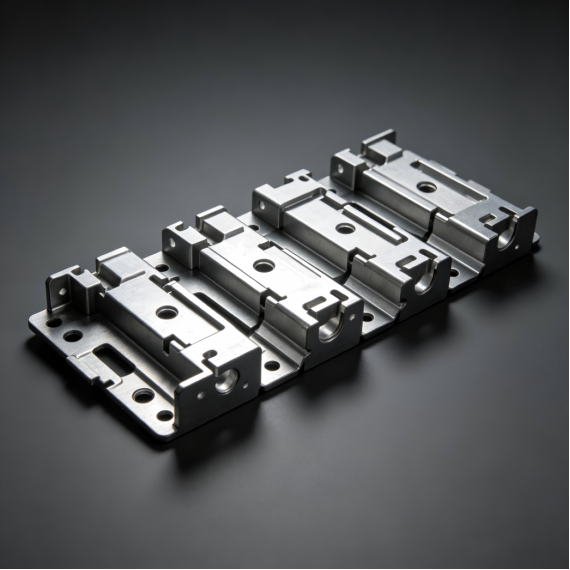
Metal stamping is widely utilized across numerous industries due to its ability to produce high-precision, complex parts at scale with consistent quality and low production cost:
· Automotive Industry — Stamping is extensively used for body panels, chassis components, brackets, battery enclosures, and structural parts. The automotive industry is one of the largest consumers of stamped components, requiring millions of parts per year with tight tolerances and consistent quality.
· Electronics and Electrical Equipment — Stamping produces connectors, terminals, shielding components, heat sinks, and enclosures for consumer electronics, telecommunications, and electrical equipment.
· Appliances — Household appliances rely on stamped components for housings, panels, brackets, and internal structural parts.
· Aerospace — Aircraft components, brackets, and structural parts are produced through stamping, where precision and consistency are critical.
· Industrial Machinery — Stamping produces components for industrial equipment, including brackets, clips, panels, and machine parts.
· Medical Devices — Medical equipment components require precision stamping for reliable performance.
Lingyufab: Your Trusted Sheet Metal Stamping Supplier in China
Lingyufab is a professional sheet metal supplier and fabrication manufacturer based in Shanghai, China, with over 20 years of precision manufacturing experience since 2003. We follow strict Japanese quality standards and are a certified core supplier for Mitsubishi Electric.
What sets Lingyufab apart as a sheet metal supplier is our comprehensive approach to metal stamping. We offer stamping alongside laser cutting, CNC bending, welding, and other fabrication services, allowing us to recommend the right process for your project without bias toward one technology.
Our comprehensive in-house capabilities include:
· Stamping — High-speed production for high-volume runs, with dies designed and fabricated to your specifications
· Laser cutting — High-precision cutting for accurate flat patterns, clean edges, and minimal material waste
· CNC bending — Precision bending with consistent accuracy across all parts and batches
· Welding — TIG welding for stainless steel, MIG welding for general fabrication, and spot welding for thin sheet connections
· Assembly — Complete assembly of fabricated components into finished products and sub-assemblies
· Surface treatment — In-house powder coating, anodizing, electroplating, and polishing
· Fastener installation — Direct installation of our own manufactured SEMS fasteners, bolts, nuts, and self-clinching fasteners
One supplier, full responsibility. From stamping and laser cutting to CNC bending, welding, surface treatment, and assembly, we handle everything under one roof. This integration eliminates the coordination gaps that often cause problems when working with multiple suppliers. Every batch of raw materials comes with a Mill Test Certificate (MTC), ensuring full traceability and compliance. We operate under ISO 9001, ISO 14001, and TÜV CE certifications, with quality control covering the complete manufacturing process from raw material inspection to finished product inspection.
If you are considering metal stamping for your project, our engineering team is available to review your part requirements, volume projections, and budget to recommend the optimal manufacturing approach. If you are looking for a reliable sheet metal supplier, please don't hesitate to contact us.
Quick Stamping Selection Checklist for Buyers
Before deciding whether stamping is right for your project, review this checklist:
Decision Factor
Stamping
Upfront tooling cost | High (tens to hundreds of thousands of dollars) |
Tooling lead time | Weeks to months |
Per-unit cost | Very low (at high volume) |
Production speed | Very fast (dozens to hundreds per minute) |
Ideal volume | High volume (typically over ten thousand parts) |
Part complexity | Capable with progressive dies |
Material thickness | Thin to medium (up to approximately 6mm / quarter inch) |
Design change flexibility | Low |
Edge quality | Clean edges; some burrs possible |
Conclusion
Metal stamping is a powerful manufacturing process that delivers high speed, consistent quality, and low per-unit cost at scale. It is the process of choice for industries that require large quantities of identical sheet metal parts—automotive, electronics, appliances, aerospace, and beyond. However, its high upfront tooling cost and long tooling lead time make it less suitable for prototypes or low-volume production. By understanding the trade-offs of stamping and working with an experienced partner like Lingyufab—who offers stamping alongside other fabrication capabilities—you can make informed decisions that balance cost, quality, and delivery.
FAQs
Q1: What is metal stamping?
Metal stamping is a cold-forming manufacturing process that uses a stamping press and custom tooling (dies) to cut, bend, and form flat sheet metal into desired shapes. It is primarily used for high-volume production of sheet metal parts.
Q2: What is the difference between stamping and pressing?
Stamping is the broader term for the overall manufacturing process, while pressing refers to the specific operation of applying force through the press to form the material. In practice, the two terms are often used interchangeably.
Q3: What materials can be stamped?
Common materials include steel, stainless steel, aluminum, brass, copper, and other ductile metals. Materials must have sufficient formability to withstand the stamping process without cracking.
Q4: What is the typical production volume for stamping?
Stamping is most cost-effective for high-volume production, typically over ten thousand parts. For volumes below this threshold, the upfront tooling cost may not be justified.
Q5: Can Lingyufab do both stamping and laser cutting?
Yes. Lingyufab offers both stamping and laser cutting in-house, allowing us to recommend the right process for your project without bias toward one technology.
Q6: What file formats do you accept for quotes?
We accept 3D files in STEP (.stp), IGS (.igs), and SolidWorks (.sldprt) formats, and 2D drawings in PDF, DWG, and DXF formats. If you don't have drawings, we offer reverse engineering services from physical samples.