+8613003178786
  sales@lingyufab.com



How to Choose the Right Material for Precision Mounting Brackets
08
Sep’2026How to Choose the Right Material for Precision Mounting Brackets
What Are Precision Mounting Brackets?
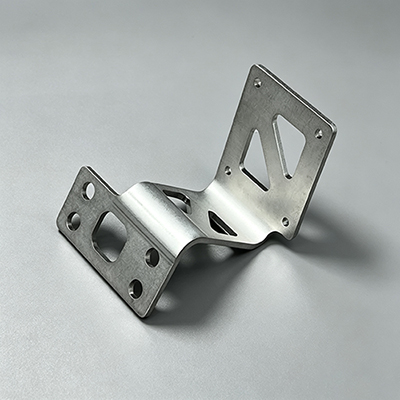
A precision mounting bracket is a fabricated metal component designed to position, support, secure, and reinforce components within a larger assembly. These brackets serve as the critical interface between equipment and its mounting surface, providing structural support while maintaining precise alignment between connected parts.
Precision mounting brackets are found in virtually every industry: they secure motors and drives in industrial automation, mount PCBs and power supplies in electronics enclosures, support structural components in aerospace applications, and provide stable mounting for medical devices and telecommunications equipment.
What distinguishes a precision mounting bracket from a general-purpose bracket is the emphasis on dimensional accuracy and repeatability. While standard brackets may have generous tolerances, precision brackets typically hold hole positions to ±0.1mm and bend angles to within ±0.5 degrees. This level of precision ensures that every bracket fits exactly as designed, eliminating costly rework and field modifications during assembly.
Lingyufab is a professional China-based OEM specializing in high-quality custom build-to-print fabrication of mounting brackets. We accurately transform your technical drawings into precision customized structural supports, PCB brackets, and internal mounting plates for industrial and electronic systems. As a direct factory with over 20 years of experience, we provide complete custom services from rapid prototyping to mass production, ensuring every component meets your exact strength and tolerance requirements. We have served over 50 global clients and strictly follow Japanese quality management systems, with rigorous full-process inspection to ensure structural integrity and precision for your final assembly.
Why Material Selection Matters for Mounting Brackets
The material you choose for a precision mounting bracket directly affects its performance, durability, and cost. Unlike off-the-shelf brackets where the material is predetermined, custom precision brackets allow you to specify the exact material that matches your application requirements.
Performance considerations include structural strength, weight, thermal conductivity, and corrosion resistance. A bracket that cannot support the required load or degrades in its operating environment will fail prematurely—potentially causing equipment damage or safety hazards.
Manufacturing considerations matter too. Different materials behave differently during fabrication: some are easier to laser cut and bend, while others require specialized tooling or cause more tool wear. Material choice affects lead times, production costs, and the range of available surface finishes.
Lifecycle cost is often overlooked. A cheaper material may cost less upfront but require replacement or cause equipment downtime if it fails. Conversely, investing in a more durable material can extend the service life of the entire assembly and reduce maintenance costs.
Common Materials for Precision Mounting Brackets
Steel: Strength and Cost-Effectiveness
Steel—particularly cold-rolled steel (SPCC/CRS)—is the most widely used material for precision mounting brackets due to its excellent combination of strength, formability, and cost-effectiveness. SPCC steel is primarily used for main custom structural brackets to provide essential strength and rigidity for heavy internal assemblies.
Cold-rolled steel offers several advantages for precision brackets:
High strength: Steel provides excellent structural rigidity even at thinner gauges, supporting heavy loads without excessive material thickness.
Superior surface quality: The cold-rolling process produces a smoother surface and more accurate thickness compared to hot-rolled steel, making it ideal for precision applications where bearing seats and mounting surfaces are critical.
Excellent formability: SPCC steel can be bent, stamped, and formed with consistent springback behavior, enabling complex bracket geometries with repeatable dimensional accuracy. This formability is achieved through processes like sheet metal bending and press brake forming, which allow for precise angle control and consistent part geometry.
For most indoor industrial applications, powder-coated SPCC steel offers the best balance of performance and cost. It is available in thicknesses from 0.5mm to 6mm and can be finished with zinc plating, powder coating, or other protective treatments.
Stainless Steel: Corrosion Resistance and Durability
Stainless steel—grades 304 and 316—is the preferred choice for precision mounting brackets in demanding environments where corrosion resistance is essential. SECC and SGCC galvanized steels also offer inherent corrosion resistance and EMI shielding for customized electronic mounting plates.
304 stainless steel provides good corrosion resistance and high strength for general outdoor applications and food processing equipment. 316 stainless steel offers superior resistance to salt spray and chemical corrosion, making it the standard choice for coastal environments, marine hardware, and chemical processing applications.
Key benefits of stainless steel for precision brackets include:
Inherent corrosion resistance: Unlike coated steels, stainless steel does not rely on a surface treatment for corrosion protection. If the coating is scratched or worn, the material remains protected.
High strength with hygienic finish: The smooth surface of stainless steel resists bacterial growth and is easy to clean, making it ideal for medical, food processing, and pharmaceutical applications.
Excellent durability: Stainless steel brackets maintain their structural integrity over decades of service, even in harsh environments.
The trade-offs are higher material cost and more difficult formability—stainless steel requires more press tonnage for bending and causes more tool wear compared to cold-rolled steel.
Aluminum: Lightweight and Thermal Performance
Aluminum—alloys 5052-H32 and 6061-T6—is the material of choice when weight reduction and thermal conductivity are priorities. Aluminum 5052 is selected for lightweight custom parts and applications requiring specific heat dissipation.
Aluminum's key advantages for precision mounting brackets:
Lightweight construction: At approximately 2.7 g/cm³, aluminum is about one-third the density of steel. This weight saving is significant for aerospace, portable equipment, and high-density electronics.
Excellent thermal conductivity: Aluminum conducts heat approximately four times better than steel, making it ideal for brackets that must dissipate heat from power components or serve as heat sinks.
Natural corrosion resistance: Aluminum forms a protective oxide layer that provides good corrosion resistance without additional coatings.
Aluminum 5052-H32 offers excellent formability for complex bracket shapes, while 6061-T6 provides higher strength with good machinability. Common finishes for aluminum brackets include anodizing (clear or colored) and powder coating.
The trade-offs include higher material cost, larger minimum bend radii (approximately 2× material thickness), and greater susceptibility to distortion during welding.
Key Factors to Consider When Choosing Bracket Materials
Load-Bearing Capacity and Structural Strength
The primary function of any mounting bracket is to support a load—whether that's a motor, a circuit board, or a structural component. The material must have sufficient strength to handle both static loads (the weight of the mounted equipment) and dynamic loads (vibration, shock, and thermal cycling).
For heavy-duty industrial applications with high loads, steel is the obvious choice. Cold-rolled steel offers high yield strength and excellent structural rigidity, supporting heavy equipment without deformation.
For lighter loads where weight reduction is more critical than absolute strength, aluminum provides adequate strength at much lower weight.
For applications requiring maximum strength with corrosion resistance, stainless steel offers both.
Environmental Conditions and Corrosion Resistance
The operating environment is perhaps the most critical factor in material selection.
| Environment | Recommended Material |
|---|---|
| Indoor, dry, climate-controlled | Powder-coated steel (SPCC) |
| Indoor with humidity or condensation | Powder-coated steel or 304 stainless steel |
| Outdoor, moderate climate | 304 stainless steel or galvanized steel with powder coating |
| Coastal or marine | 316/316L stainless steel |
| Chemical or food processing | 316L stainless steel |
| High temperature (>100°C) | Stainless steel or aluminum |
For outdoor applications or environments with moisture, corrosion protection is non-negotiable. Powder-coated steel works well in moderate outdoor conditions, but for harsh environments, stainless steel is the most reliable choice.
Weight Constraints and Handling Requirements
Weight is a critical design factor in aerospace, automotive, and portable electronics applications. Every gram of weight saved can improve fuel efficiency, extend battery life, or simplify installation.
For weight-sensitive applications, aluminum provides the best strength-to-weight ratio among common bracket materials. A typical aluminum bracket weighs approximately one-third of its steel counterpart while providing adequate strength for most applications.
Cost and Manufacturing Efficiency
Cost is often the deciding factor in material selection. The total cost includes raw material cost, manufacturing cost, and lifecycle cost.
| Material | Raw Material Cost | Manufacturing Cost | Lifecycle Cost |
|---|---|---|---|
| Steel (SPCC) | Low | Low (easy to laser cut and bend, consistent springback) | Moderate (requires coating for corrosion protection) |
| Stainless Steel | High | Moderate (harder to form, more tool wear) | Low (durable, no coating needed) |
| Aluminum | Moderate | Moderate (requires larger bend radii, more prone to springback) | Low (natural corrosion resistance, long service life) |
For most indoor industrial applications, powder-coated steel offers the best value. For applications requiring corrosion resistance or weight reduction, the higher upfront cost of stainless steel or aluminum is often justified by longer service life and lower maintenance requirements.
How to Choose the Right Bracket Material for Your Application
The following decision framework can help guide your material selection:
Step 1: Define the Load Requirements
Determine the static and dynamic loads the bracket must support. For heavy loads or high-vibration environments, steel is the safest choice. For moderate loads where weight matters, aluminum performs well.
Step 2: Assess the Environment
Consider the operating environment. Indoor, climate-controlled installations can use powder-coated steel. Outdoor, humid, or corrosive environments require stainless steel or aluminum with appropriate finish.
Step 3: Evaluate Weight Constraints
If weight reduction is a priority (aerospace, portable equipment, high-density electronics), aluminum offers the best strength-to-weight ratio.
Step 4: Consider Thermal Requirements
If the bracket must dissipate heat or maintain dimensional stability under temperature changes, aluminum's superior thermal conductivity is a significant advantage.
Step 5: Review Budget and Production Volume
For high-volume production, steel's lower material cost and consistent formability make it the most cost-effective option. For custom or low-volume production where tooling costs matter less, the choice depends more on performance requirements.
Step 6: Factor in Surface Finish Requirements
Powder coating is standard for steel brackets. Aluminum can be anodized for durability and aesthetics. Stainless steel requires no coating but can be passivated for enhanced corrosion resistance.
Lingyufab: Precision Sheet Metal Fabrication Supplier for Mounting Brackets
Lingyufab combines over 20 years of precision sheet metal experience with a comprehensive approach to custom mounting bracket manufacturing. As a professional China-based OEM specializing in high-quality custom build-to-print fabrication of mounting brackets, we accurately transform your technical drawings into precision customized structural supports, PCB brackets, and internal mounting plates for industrial and electronic systems.
Our integrated manufacturing capabilities cover the entire production cycle—from material sourcing to fabrication, assembly, and finishing. We utilize high-precision fiber laser cutting systems, CNC bending centers, high-tonnage stamping presses, and expert welding stations to fabricate complex custom mounting brackets. We support both zero-tooling rapid prototyping for initial custom batches and high-efficiency tooling for large-scale stamping, helping you significantly reduce unit costs as your project grows.
We specialize in integrating precision hardware such as PEM nuts, studs, and standoffs through automated insertion processes to simplify your final assembly. Our workshop features high-precision Laser Cutting Systems, CNC Bending Centers, Stamping Presses, and Cold Heading Machines for bolts and nuts, enabling us to handle everything from single prototypes to mass production with short lead times and consistent quality control.
We operate under the ISO 9001:2015 quality management system and strictly follow Japanese quality management standards, with rigorous full-process inspection at every stage from raw material to final delivery. Our engineering team provides DFM reviews to optimize designs for lower costs and improved manufacturability, helping customers avoid common design mistakes before production begins.
Not sure which material fits your mounting bracket project? Contact Lingyufab today with your design files and application requirements. Our engineering team will review your specifications and provide a competitive quote within 24 hours.
FAQs
What is the most common material for precision mounting brackets?
Cold-rolled steel (SPCC/CRS) is the most widely used material due to its excellent strength, formability, and cost-effectiveness. It is suitable for most indoor industrial applications.
When should I choose stainless steel over carbon steel for my brackets?
Choose stainless steel when the bracket will be exposed to moisture, chemicals, salt spray, or outdoor conditions. 304 stainless steel is suitable for most outdoor applications; 316 stainless steel is required for coastal or marine environments.
Is aluminum strong enough for mounting brackets?
Aluminum provides adequate strength for most electronics, telecommunications, and lightweight industrial applications. For heavy loads or high-vibration environments, steel is generally recommended.
How does material choice affect bracket tolerance?
Precision brackets typically hold ±0.1mm tolerances regardless of material. However, aluminum has more springback than steel and requires careful tooling setup to achieve consistent bend angles. Our engineering team can help optimize your design for the chosen material.
Can Lingyufab manufacture brackets from all three materials?
Yes. Lingyufab fabricates precision mounting brackets from SPCC steel, stainless steel (304/316), and aluminum (5052/6061). We can help you select the optimal material based on your load requirements, environmental conditions, and budget constraints.