+8613003178786
  sales@lingyufab.com



Electrical-Control-Box Assembly: Indoor vs. Outdoor Design Considerations
07
Sep’2026Electrical-Control-Box Assembly: Indoor vs. Outdoor Design Considerations
What Is an Indoor Electrical-Control-Box Assembly?
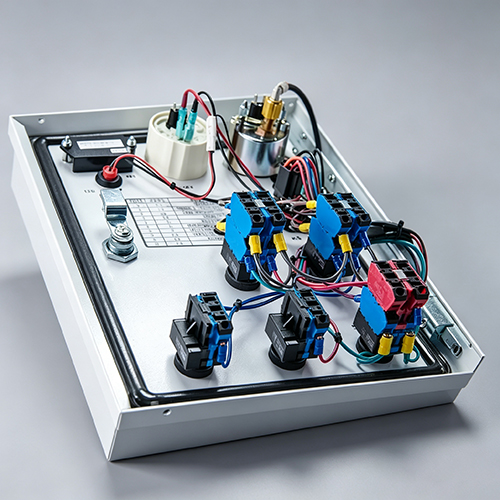
An indoor electrical-control-box assembly is a fabricated enclosure designed to house control systems, power distribution components, and electronic equipment within protected interior environments. Unlike outdoor assemblies, indoor enclosures benefit from controlled ambient conditions: no direct rain, limited dust, relatively stable temperatures, and protection from UV exposure.
Indoor electrical-control-box assemblies are typically installed in environments such as:
Equipment rooms with climate control
Commercial electrical closets
Indoor industrial facilities with HVAC and air filtration
Automated manufacturing lines
Building management system control rooms
Because indoor environments are controlled, these assemblies can utilize lower IP ratings without compromising reliability. However, "indoor" does not always mean "dry and clean"—some indoor spaces such as parking garages, kitchens, laundry rooms, or unheated warehouses can present challenges like condensation, steam, or cleaning spray that require upgraded protection.
Lingyufab is a professional sheet metal assembly and fastener manufacturer in China, specializing in custom precision electrical-control-box assemblies for both indoor and outdoor applications. With over 20 years of precision sheet metal experience, we design and fabricate enclosures that meet stringent IP and NEMA ratings for diverse industrial environments.
What Is an Outdoor Electrical-Control-Box Assembly?
An outdoor electrical-control-box assembly is a weather-resistant enclosure designed to protect electrical and electronic equipment from the full range of environmental hazards encountered in exterior installations. Unlike indoor assemblies, outdoor control boxes must continuously withstand rain, snow, dust, ultraviolet radiation, extreme temperature fluctuations, and potentially salt spray or chemical exposure.
Outdoor electrical-control-box assemblies are typically installed in:
Telecommunications towers and base stations
Renewable energy systems (solar, wind)
Outdoor industrial equipment
Transportation infrastructure (traffic control, railway signaling)
Edge computing and IoT network nodes
Outdoor enclosures must provide robust ingress protection, corrosion resistance, and often enhanced thermal management to handle the combination of sealing requirements and heat dissipation. The material choice is critical for outdoor assemblies—while metallic enclosures generally dissipate heat better than non-metallic ones, the material must also resist corrosion from weather and environmental contaminants.
Indoor vs. Outdoor: Key Design Differences
The following table summarizes the critical design differences between indoor and outdoor electrical-control-box assemblies:
| Design Factor | Indoor Assembly | Outdoor Assembly |
|---|---|---|
| Protection Rating | IP20–IP40 / NEMA 1–12: Basic dust protection, splash resistance sufficient | IP54–IP67 / NEMA 3R–4X: Dust-tight, water jet-resistant, corrosion protection required |
| Primary Materials | SPCC cold-rolled steel with powder coating; cost-effective options | Stainless steel (304/316L), aluminum, or galvanized steel with robust finish |
| Sealing Design | Standard gaskets; moderate sealing requirements | Continuous closed-cell gaskets, compression latches, overlapping flanges for water channeling |
| Thermal Management | Natural convection often sufficient; lower cooling demand | Passive with louvers/heat sinks; active cooling (heat exchangers, AC units) for high-power |
| Corrosion Protection | Powder coating standard; indoor environment limited exposure | Stainless steel inherent resistance, anodizing, or durable powder coating for UV and corrosion |
| UV Resistance | Not typically required | UV-stable powder coating or stainless steel; UV degradation risk in plastics |
| Structural Requirements | Standard impact resistance | Higher impact resistance (IK rating), resistance to ice formation and wind loads |
| Hardware & Accessibility | Standard fasteners and hinges; service access routine | Corrosion-resistant hardware; secure latching; tamper resistance considerations |
| Typical Challenges | Dust, accidental contact, limited humidity | Water ingress, temperature extremes, UV degradation, salt spray, pest intrusion |
How to Select the Right Electrical-Control-Box Assembly for Your Application
Selecting the appropriate electrical-control-box assembly requires balancing protection requirements with cost and manufacturing considerations. The following framework can help guide the decision:
Step 1: Define the Installation Environment
Start by understanding where the assembly will be located. Indoor installations with stable conditions can use lower ratings such as IP20–IP40. However, be aware that some "indoor" spaces—such as underground garages, kitchens, laundry rooms, or unheated warehouses—can present moisture, steam, or condensation challenges that demand upgraded protection.
Step 2: Determine the Required Protection Rating
Choose a rating that matches the real threat, not the specification wish. For outdoor installations, IP65 (dust-tight, water jet-proof) is the recommended minimum for most applications. For coastal areas, harsh wash-down environments, or severe weather exposure, IP66 with NEMA 4X is advisable.
| Threat Level | Minimum Recommended Rating |
|---|---|
| Indoor, dust-protected | IP20–IP40 / NEMA 1–12 |
| Dust + light rain | IP65 / NEMA 3R |
| Strong water spray / wash-down | IP66 / NEMA 4 |
| Corrosion + spray | NEMA 4X / stainless steel |
| Temporary immersion risk | IP67 |
Step 3: Select the Material Based on Environment
Material choice should be driven by the environment, not just cost. For indoor applications, powder-coated SPCC or SGCC steel provides excellent protection at lower cost. For outdoor applications in moderate conditions, 304 stainless steel or aluminum with appropriate finish is recommended. For coastal or chemically aggressive outdoor environments, 316/316L stainless steel is the preferred choice due to its superior resistance to salt spray and chemical corrosion.
Step 4: Consider Manufacturing and Lifecycle Costs
Unit price is only part of the equation; consider lifecycle cost. An outdoor-grade enclosure costs more upfront but reduces replacement labor, failure risk, and maintenance over the equipment's lifetime. For custom applications, sheet metal fabrication remains the most cost-effective method for enclosure production at 1–500 units, offering flexibility without requiring expensive injection molds.
Step 5: Evaluate Thermal Management Needs
Sealed outdoor enclosures can trap heat, potentially exceeding component operating limits. If heat dissipation is a concern, metallic enclosures typically dissipate heat better than non-metallic alternatives. Consider passive cooling with aluminum panels or ventilation louvers. For high-power applications in sealed enclosures, active cooling solutions such as filter fans, heat exchangers, or air conditioners may be necessary.
Step 6: Consider EMI Shielding Requirements
For assemblies housing sensitive electronics, EMI shielding is a critical consideration. Metal enclosures provide inherent EMI shielding—they act as a natural Faraday cage without requiring additional treatments. Plastic enclosures, while offering insulation and corrosion resistance, do not provide EMI shielding unless conductive coatings or metalized fillers are applied, which adds cost and complexity.
Lingyufab: Precision Sheet Metal Fabrication Supplier for Electrical-Control-Box Assemblies
Lingyufab combines over 20 years of precision sheet metal experience with a comprehensive approach to custom electrical-control-box assembly manufacturing. As a certified core supplier for Mitsubishi Electric, we meet the stringent quality and delivery standards required by demanding industrial applications.
Our integrated manufacturing capabilities cover the entire production cycle—from design review and DFM optimization to fabrication, assembly, and finishing. We operate high-precision laser cutting systems, CNC bending centers, welding equipment, and powder coating lines, all under one roof. Our workshop features high-precision Laser Cutting Systems, CNC Bending Centers, Stamping Presses, and Cold Heading Machines for bolts and nuts, enabling us to handle everything from single prototypes to mass production with short lead times and consistent quality control.
We operate under the ISO 9001:2015 quality management system and strictly follow Japanese quality management standards, with rigorous inspection at every stage from raw material to final delivery. Our engineering team provides DFM reviews to optimize designs for lower costs and improved manufacturability, helping customers avoid common design mistakes before production begins.
Not sure whether indoor or outdoor design fits your electrical-control-box assembly project? Contact Lingyufab today with your technical requirements and environmental conditions. Our engineering team will review your specifications and provide design recommendations along with a competitive quote within 24 hours.
Frequently Asked Questions
What is the minimum IP rating for an outdoor electrical-control-box assembly?
IP65 is the recommended minimum for most outdoor applications. IP66 provides protection against powerful water jets and is recommended for wash-down environments or severe weather.
What material is best for an outdoor electrical-control-box assembly in coastal environments?
316/316L stainless steel is the preferred choice for coastal and marine environments due to its superior resistance to salt spray corrosion. 304 stainless steel is suitable for general outdoor use with moderate exposure.
Why can't an IP66 enclosure be certified as NEMA 4?
IP ratings only measure protection against dust and water, while NEMA ratings also test for corrosion, ice formation, and oil resistance. An IP66 box is not required to pass NEMA 4's corrosion and ice tests, so they are not directly equivalent.
How do I prevent overheating in a sealed outdoor electrical-control-box assembly?
Metal enclosures dissipate heat better than plastic options. Use passive ventilation with louvers and aluminum panels for heat dissipation, or add filter fans, heat exchangers, or air conditioners for active cooling in high-power applications.
Can Lingyufab manufacture both indoor and outdoor electrical-control-box assemblies?
Yes. Lingyufab specializes in custom sheet metal assemblies for both indoor and outdoor applications, tailored to your specific dimensions, IP/NEMA ratings, material, and hardware requirements. We handle everything from prototyping to mass production