+8613003178786
 sales@lingyufab.com



How to Improve Material Utilization in Laser Cutting: A Guide to Nesting Optimization
21
Oct’2026How to Improve Material Utilization in Laser Cutting: A Guide to Nesting Optimization
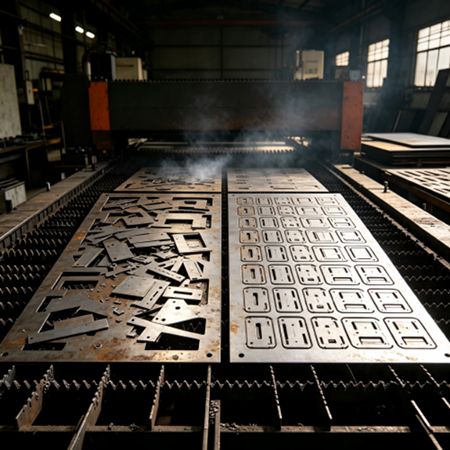
Laser cutting nesting is one of the most effective ways to reduce material waste and lower production costs in sheet metal fabrication. Have you ever looked at a laser cutting quote and wondered why the material cost was so high—even though the parts themselves seemed small and simple? The answer often lies in how efficiently the parts are arranged on the sheet. Poor nesting can waste 20‑30% of the material, and that waste is passed directly to you.
At Lingyufab, we understand that material utilization is one of the biggest cost drivers in sheet metal fabrication. With over 20 years of precision manufacturing experience since 2003 and certification as a core supplier for Mitsubishi Electric, our advanced fiber laser cutting systems feature AI‑assisted nesting software that maximizes material utilization and minimizes waste. This guide explains what nesting is, why it matters, the factors that affect nesting efficiency, and how to optimize your designs for better material utilization.
What Is Nesting and Why Does It Matter?
Nesting is the process of arranging parts on a sheet of metal to minimize waste and maximize the number of parts produced per sheet. Think of it like packing a suitcase—the more efficiently you arrange your items, the more you can fit. A good nesting layout can save hundreds of dollars per sheet, especially when multiplied across thousands of sheets per year.
Why nesting matters to you: Higher material utilization means lower material costs. Poor nesting creates scrap, and that scrap cost is passed on to you. In high‑volume production, even a 5% improvement in nesting efficiency can translate to significant annual savings.
Factors That Affect Nesting Efficiency
Part geometry — Simple shapes like rectangles and circles nest more efficiently than complex, irregular shapes. Parts with straight edges and right angles allow tighter packing.
Part size and quantity — The combination of different part sizes and quantities affects how well they can be arranged. Mixing large and small parts can improve nesting efficiency by filling gaps that would otherwise be waste.
Material sheet size — Parts must fit within the standard sheet dimensions. Some designs may need to be adjusted to fit better on the available sheet size.
Gap between parts — A minimum gap is required between parts to allow for cutting and to prevent heat buildup. This gap is typically 0.5‑1.0mm, depending on material thickness. Smaller gaps improve nesting efficiency but require more precise control.
Common Nesting Mistakes and How to Avoid Them
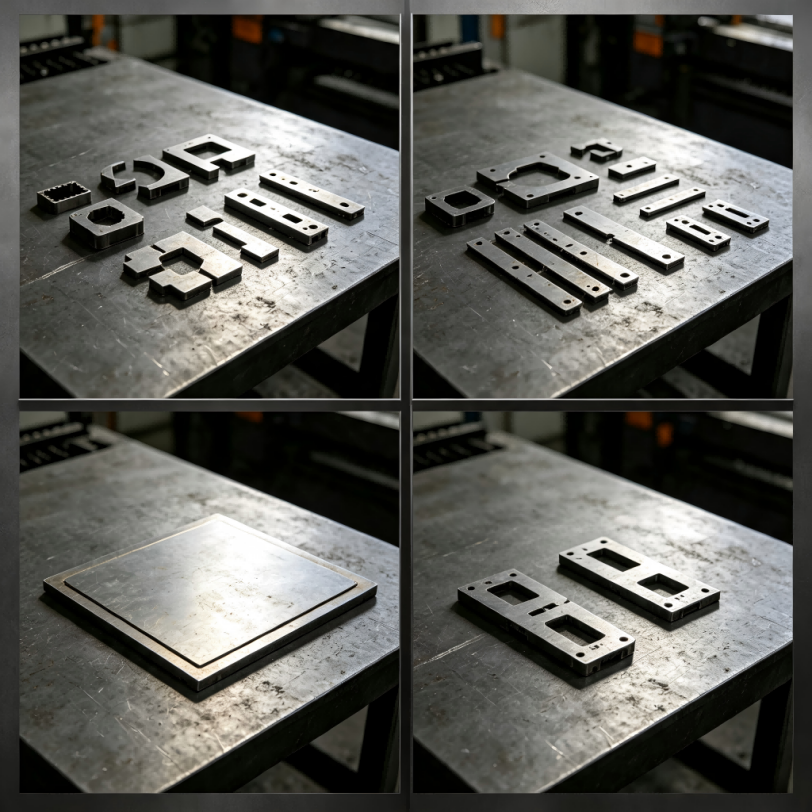
Designing parts without considering sheet size. Parts that don't fit well on standard sheets create excessive waste. Review your design against standard sheet dimensions before finalizing.
Using excessive spacing between parts. While spacing is necessary, using more than the minimum required gap wastes material. Work with your fabricator to determine the minimum safe gap for your material.
Not mixing part sizes. Nesting multiple part sizes together can significantly improve utilization. If you have different parts in the same material, consider ordering them together to optimize nesting.
Ignoring grain direction. Some materials have a grain direction that affects strength and appearance. Nesting parts without considering grain direction can compromise quality or force less efficient nesting.
AI‑Assisted Nesting: How Smart Software Saves Material
Traditional nesting relies on manual arrangement or basic software algorithms. AI‑assisted nesting uses advanced algorithms to find the optimal arrangement automatically, often improving material utilization by 5‑15% compared to manual nesting.
How AI‑assisted nesting works: The software evaluates thousands of possible arrangements in seconds, finding the layout that maximizes material utilization. It considers part geometry, sheet size, gap requirements, and grain direction constraints. The result is a nesting layout that would take an experienced operator hours to achieve manually.
What this means for you: Better material utilization means lower material costs. Faster nesting also means shorter lead times, and consistent quality through optimized cutting parameters.
How to Optimize Your Designs for Better Nesting
Use standard sheet sizes. Design parts that fit efficiently on standard sheet sizes. The most common sheet sizes are 1500×3000mm and 1250×2500mm.
Simplify part geometry. Rectangular and circular shapes nest more efficiently. Consider whether complex cutouts are necessary or if they can be simplified.
Group parts by material. If you have multiple parts in the same material, order them together to allow combined nesting.
Consider part orientation. Some parts can be rotated to fit better. A part that doesn't fit in one orientation may fit perfectly in another.
Design for common gaps. Use the minimum gap required for your material. Your fabricator can advise on the appropriate gap for your specific application.
How Lingyufab Optimizes Nesting for You
Lingyufab is a professional sheet metal fabrication manufacturer and sheet metal supplier based in Shanghai, China, with over 20 years of precision manufacturing experience since 2003. We follow strict Japanese quality standards and are a certified core supplier for Mitsubishi Electric.
What sets Lingyufab apart as a sheet metal supplier is our commitment to material efficiency. Our advanced fiber laser cutting systems feature AI‑assisted nesting software that maximizes material utilization and minimizes waste. Our engineering team reviews your designs before production, identifying opportunities to improve nesting efficiency and reduce material costs.
Our in‑house capabilities include:
Laser cutting — High‑precision cutting with optimized nesting for maximum material utilization.
CNC bending — Precision bending with consistent accuracy and springback compensation.
Laser welding — High‑speed, low‑distortion welding with minimal heat input.
Sheet metal fabrication — Complete assembly, surface treatment, and fastener installation.
ISO 9001, ISO 14001, and TÜV CE certified.
Full material traceability with Mill Test Certificates.
One supplier, full responsibility. From laser cutting and CNC bending to welding, surface treatment, and fastener installation, we handle everything under one roof. This integration ensures consistent quality, shorter lead times, and a single point of accountability for your entire project.
If you are looking to reduce material costs in your sheet metal parts, our engineering team is available to review your designs and provide a free nesting optimization consultation. If you are looking for a reliable sheet metal fabrication supplier, please don't hesitate to contact us.
Quick Nesting Optimization Checklist for Buyers
| What to Check | What to Consider |
|---|---|
| Part geometry | Can complex shapes be simplified to improve nesting? |
| Sheet size | Does your part fit efficiently on standard sheet sizes? |
| Gap requirements | Are gaps at the minimum required for your material? |
| Part grouping | Are parts in the same material grouped together? |
| Grain direction | Does grain direction affect nesting efficiency? |
| Order quantity | Is the quantity optimized for sheet utilization? |
FAQs
Q1: What is nesting in laser cutting?
Nesting is the process of arranging parts on a sheet of metal to minimize waste and maximize the number of parts produced per sheet. Efficient nesting reduces material costs and improves production efficiency.
Q2: How much material can nesting save?
Good nesting can improve material utilization by 5‑15% compared to poor nesting. In high‑volume production, even a 5% improvement can translate to significant annual savings.
Q3: What is the minimum gap between parts in nesting?
The minimum gap is typically 0.5‑1.0mm, depending on material thickness and cutting parameters. Your fabricator can advise on the appropriate gap for your specific application.
Q4: Does part shape affect nesting efficiency?
Yes. Simple shapes like rectangles and circles nest more efficiently than complex, irregular shapes. Designing parts with nesting in mind can significantly reduce material waste.
Q5: Can Lingyufab help me optimize nesting for my parts?
Yes. Lingyufab's engineering team can review your designs and recommend nesting optimizations to improve material utilization and reduce costs. We use advanced AI‑assisted nesting software to find the optimal arrangement for your parts.
Q6: What file formats do you accept for nesting optimization? We accept 3D files in STEP (.stp), IGS (.igs), and SolidWorks (.sldprt) formats, and 2D drawings in PDF, DWG, and DXF formats. For nesting optimization, we also need material specifications, quantity requirements, and sheet size preferences.