+8613003178786
  sales@lingyufab.com


Sheet Metal Design for Manufacturing: 10 Common Mistakes and How to Avoid Them
17
Sep’2026Sheet Metal Design for Manufacturing: 10 Common Mistakes and How to Avoid Them
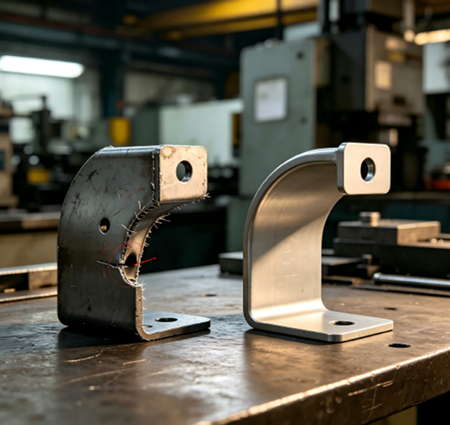
Have you ever spent weeks perfecting a CAD design, only to receive parts that were warped, cracked, or didn't fit together in assembly? Or perhaps you have faced production delays, unexpected cost increases, or parts that simply couldn't be fabricated as designed? These are among the most frustrating and costly problems faced by design engineers, product developers, and procurement professionals. A design that looks perfect on screen can quickly become a nightmare on the shop floor.
The root cause of many such failures traces back to one thing: Design for Manufacturability (DFM) was not considered early enough. DFM is the practice of designing parts that can actually be produced efficiently using standard tooling and manufacturing processes. While a DFM checklist helps you verify your design, knowing the most common mistakes helps you avoid them in the first place. This guide focuses on the mistakes we see most often—and how to fix them.
Industry estimates suggest that up to 70% of manufacturing costs are determined during the design phase. When DFM is applied early, it prevents errors before production starts, improves consistency across parts, and reduces costly rework.
At Lingyufab, we bridge the gap between CAD models and real-world fabrication. Our engineering team performs free DFM reviews on every project. With over 20 years of precision manufacturing experience since 2003 and certification as a core supplier for Mitsubishi Electric, we have seen the same design mistakes repeated time and again. This guide covers the ten most common sheet metal design mistakes we encounter and provides practical solutions to help you design parts that are easier to produce, more cost-efficient, and reliable in production.
Why DFM Matters in Sheet Metal Fabrication
Designing for sheet metal isn't like designing for plastic, castings, or 3D printing. It comes with its own set of constraints—bend allowances, grain direction, tool clearances, and flat pattern geometry. All of these considerations directly affect how a part is formed, cut, and assembled.
In sheet metal fabrication, small design choices have big consequences. A misplaced hole, an overlooked bend radius, or a tolerance that's too tight can stall production or drive up costs. The cost of fixing a problem during production is exponentially higher than catching it during the design phase. This is why Lingyufab provides free DFM reviews before production begins. Our goal is to catch issues early so you don't pay for them later.
Mistake 1: Submitting a 3D Model Without Proper Bend Information
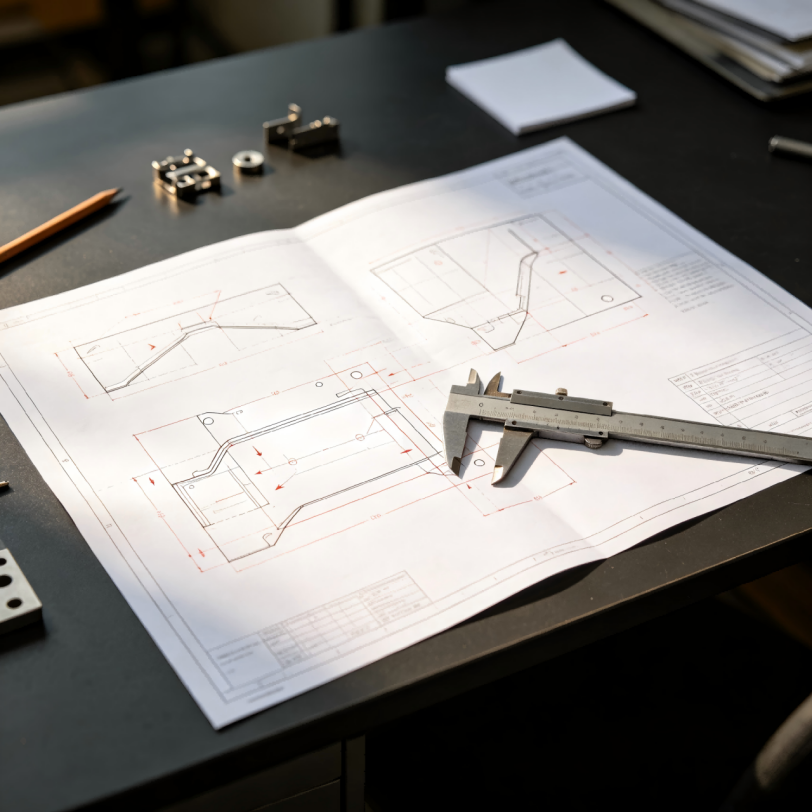
Many designers submit solid 3D models without clearly defining bend lines, bend radii, or bend directions. Manufacturers may not be able to accurately identify bend locations, flat pattern dimensions, or forming sequences, leading to inaccurate quotations, dimensional deviations, or even manufacturing failure.
Solution: Use dedicated sheet metal modeling tools when creating the design. Clearly define bend lines, bend radii, and bend directions in your drawings. Keep material thickness consistent throughout the part and provide flat pattern drawings for fabrication and bend verification. Lingyufab's engineering team can review your 3D models and 2D drawings to identify missing or ambiguous information before production begins.
Mistake 2: Ignoring Bend Radius and Springback
Bend radius is one of the most commonly overlooked design parameters. When the inside bend radius is too tight relative to the material thickness, the material can crack, stress fractures can occur, or the part can lose structural integrity.
Springback is another common issue—the metal attempts to revert to its original flat shape after being bent. Aluminum alloys may spring back by 2–3 degrees; high-strength steels can spring back by 5 degrees or more.
Solution: A good rule of thumb is to match the inside bend radius to the material thickness. For example, a 2mm stainless steel sheet works best with a 2mm inside radius. If you must use a tighter radius, check with your fabricator first. Use consistent bend radii throughout the same part to reduce tooling changes and manufacturing cost. Lingyufab's engineering team can recommend the optimal bend radius and springback compensation for your specific material and application.
Mistake 3: Placing Holes or Features Too Close to Bend Lines
This is one of the most common and costly design mistakes. Material near the bend area undergoes severe deformation during bending. Holes, slots, or cutouts placed too close to a bend line can become distorted, crack at the edges, or lose structural strength.
Solution: A widely accepted guideline is the 4T rule: maintain a minimum distance from the feature edge to the bend line of at least 4 × material thickness. As a general recommendation, place holes at least 2–3 times the material thickness away from any bend. If the feature cannot be relocated, add relief slots or cutouts to absorb the deformation. Lingyufab's DFM review identifies hole-to-bend conflicts early and provides specific relocation or relief recommendations.
Mistake 4: Missing Bend Relief Slots
When a bend line intersects directly with an edge, the material lacks enough space to deform properly, often causing tearing, bulging, or bend angle distortion. This is especially common in enclosures with bends near corners.
Solution: Add bend relief slots or cutouts at bend terminations. Recommended relief width should be at least the material thickness; recommended relief depth should be at least the material thickness plus the bend radius. Relief slots help reduce stress concentration, improve corner quality, and prevent tearing.
Mistake 5: Designing Flanges That Are Too Short
Press brake tooling requires adequate support during bending. Extremely short flanges may slip, deform, or fail to maintain proper bend positioning. Short flanges simply can't span the die and punch, making bending unfeasible.
Solution: The minimum flange length should generally be at least 2 × material thickness + bend radius. A commonly recommended minimum is that the flange height should be at least 4 times the sheet thickness for 90° bends. Thin aluminum and thick stainless steel may require different minimum values depending on tooling capability.
Mistake 6: Overlooking Bend Sequence and Collision Risks
Closely spaced bends or conflicting bend directions can create part interference or tooling collisions during forming. Long flanges and narrow channels often cause parts to hit the machine's punch or other tooling, halting the process.
Solution: Maintain sufficient spacing between bends for tooling clearance. Simulate the bend sequence for complex parts. Follow common forming practices such as "inside bends first, outside bends later". If necessary, split enclosed box structures into multiple parts. Lingyufab's engineering team sequences bends to minimize distortion and can identify potential collision risks before they become production problems.
Mistake 7: Ignoring Hole Size and Spacing Guidelines
Holes that are too small for the material thickness can be difficult to cut cleanly. If holes are too close together, heat from laser cutting or stress from punching can cause distortion.
Solution: A commonly used guideline is to maintain a minimum hole diameter that is at least equal to the sheet thickness. For example, in 2mm stainless steel, holes smaller than 2mm may come out tapered or incomplete. A standard recommendation is to maintain an edge-to-edge spacing of at least 1.5 to 2 times the sheet thickness. In 3mm aluminum, this translates to keeping holes at least 4.5mm apart to help ensure clean edges and stable parts.
Mistake 8: Designing Sharp Internal Corners
Sharp internal corners can lead to stress points, cracking, or require special tooling. In sheet metal fabrication, a small radius adjustment often solves the issue and speeds up production.
Solution: A commonly recommended practice is to add a radius to internal corners—typically at least half the material thickness. The radius helps reduce stress concentrations, extends tool life, and helps prevent cracking during forming.
Mistake 9: Specifying Unrealistic Tolerances
Over-tolerancing a non-critical feature increases inspection time and slows down production unnecessarily. Tighter tolerances generally mean slower production, which can result in increased labor hours due to the need for greater precision.
Solution: When possible, avoid tight tolerances in sheet metal fabrication. Only apply tight tolerances to critical features. Use standard tolerances for everything else. Typical sheet metal tolerances are approximately ±0.1mm for laser cutting and ±0.5° for bending. Lingyufab's quality control procedures, backed by ISO 9001, ISO 14001, and TÜV CE certifications, ensure that standard tolerances are consistently met.
Mistake 10: Complex, Overcomplicated Part Geometry
Complex cutouts, overlapping bends, or excessive flange variation can reduce yield and increase machine time. Each additional bend, cutout, or feature adds cost and increases the chance of errors.
Solution: Simplify your design wherever possible. Eliminate internal pockets or holes that don't nest well. Avoid acute angles or complex cutouts. If possible, make sure all bends on the same plane go in the same direction—this allows the press brake to perform the bend without having to reorient the part.
DFM Checklist for Engineers and Procurement Professionals
| Check Item | Guideline |
|---|---|
| Bend radius | ≥ material thickness (generally recommended) |
| Bend relief | Width ≥ material thickness; depth ≥ thickness + bend radius |
| Hole-to-bend distance | ≥ 4 × material thickness (4T rule) |
| Hole diameter | ≥ material thickness (generally recommended) |
| Hole-to-hole spacing | ≥ 1.5 × material thickness (typical guideline) |
| Flange length | ≥ 4 × material thickness (for 90° bends) |
| Internal corners | Add radius (≥ 0.5 × material thickness recommended) |
| Tolerance | Only apply tight tolerances to critical features |
| Bend direction | Keep all bends in same direction where possible |
Note: All values above are general design guidelines. Specific requirements may vary depending on material type, thickness, and application. Always consult with your fabrication partner for project-specific recommendations.
How Lingyufab Can Help with Your DFM Needs
Lingyufab is a Shanghai-based sheet metal manufacturer with over 20 years of precision fabrication experience since 2003. We are a certified core supplier for Mitsubishi Electric and operate under strict Japanese quality standards.
What sets us apart is our commitment to engineering support. Every project receives a free DFM review before production begins. Our engineering team checks for:
Bend parameters – radii, reliefs, and springback compensation
Feature placement – hole-to-bend clearances, hole spacing, and edge distances
Tolerance realism – separating critical features from non-critical ones
Tooling conflicts – bend sequence feasibility and collision risks
Cost optimization – material yield, process simplification, and standardization opportunities
We also manufacture what we review. Our in-house capabilities cover laser cutting, CNC bending, welding, surface treatment, fastener installation, and assembly—all under one roof. ISO 9001, ISO 14001, and TÜV CE certified. Full material traceability with Mill Test Certificates.
If you are unsure whether your design is manufacturable, send us your drawings for a free DFM consultation. We will identify issues before they cost you time and money.
Conclusion
Good sheet metal design balances function with fabricability. By following these DFM guidelines—using appropriate bend radii, respecting minimum hole-to-bend distances, adding bend reliefs, simplifying geometry, and specifying realistic tolerances—you can avoid costly mistakes, reduce production delays, and help ensure your parts are manufactured correctly the first time. Early collaboration with an experienced fabrication partner like Lingyufab can make the difference between a design that works on paper and one that works in production.
FAQs
Q1: What is DFM in sheet metal fabrication?
DFM (Design for Manufacturability) is the practice of designing parts that can be produced efficiently using standard tooling and manufacturing processes. It helps ensure that every design choice, from bend allowance to hole placement, supports smooth fabrication instead of creating problems on the shop floor.
Q2: Why is bend radius important in sheet metal design?
A bend radius that is too tight relative to the material thickness can cause cracking, stress fractures, or loss of structural integrity. A commonly used guideline is to match the inside bend radius to the material thickness.
Q3: What is the 4T rule in sheet metal design?
The 4T rule states that the minimum distance from a feature edge (such as a hole or slot) to the bend line should be at least 4 × material thickness. This helps prevent distortion, cracking, and loss of structural strength during bending.
Q4: Can Lingyufab review my design before production?
Yes. Lingyufab provides free DFM review services. Our engineering team can review your drawings, identify potential manufacturability issues, and suggest design improvements that can help reduce costs and simplify production.
Q5: What file formats do you accept for design review?
We accept 3D files in STEP (.stp), IGS (.igs), and SolidWorks (.sldprt) formats, and 2D drawings in PDF, DWG, and DXF formats. If you don't have drawings, we offer reverse engineering services from physical samples.
Q6: How much can DFM review save on production costs?
Early DFM review can significantly reduce part costs by eliminating unnecessary complexity and avoiding last-minute design changes. The earlier DFM is applied in the design process, the greater the potential savings. Lingyufab's free DFM consultation helps you capture these savings before production begins.