+8613003178786
 sales@lingyufab.com



Sheet Metal Enclosures for Medical Devices: Manufacturing Standards and Quality Requirements
26
Oct’2026Sheet Metal Enclosures for Medical Devices: Manufacturing Standards and Quality Requirements
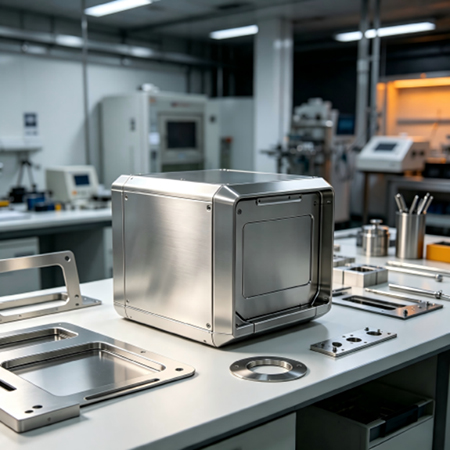
Sheet metal enclosures are critical components in medical devices, protecting sensitive electronics, ensuring patient safety, and maintaining the sterility and durability required in healthcare environments. Have you ever considered why medical device enclosures look so clean, feel so solid, and perform so reliably under demanding conditions? The answer lies in the rigorous manufacturing standards and quality requirements that govern medical device fabrication—standards that go far beyond typical industrial enclosures.
At Lingyufab, we understand the unique demands of medical device manufacturing. With over 20 years of precision manufacturing experience since 2003 and certification as a core supplier for Mitsubishi Electric, our sheet metal fabrication capabilities are aligned with the strict quality, cleanliness, and traceability requirements of the medical industry. This guide explains the key standards, material requirements, and manufacturing considerations for sheet metal enclosures used in medical devices.
Why Medical Device Enclosures Are Different
Medical device enclosures are not just protective housings—they are critical components that must meet exacting standards:
• Patient safety. Enclosures must protect patients and operators from electrical hazards, sharp edges, and contamination. Surfaces must be smooth, burr‑free, and easy to clean.
• Regulatory compliance. Medical devices must comply with regulations such as FDA 21 CFR Part 820, ISO 13485, and IEC 60601‑1 for electrical safety.
• Cleanability and sterilization. Enclosures must withstand repeated cleaning with harsh disinfectants and, in some cases, sterilization processes such as autoclaving.
• Biocompatibility. Materials in contact with patients or operators must meet biocompatibility requirements (ISO 10993).
• Reliability. Medical equipment often operates in critical care settings where failure is not an option. Enclosures must provide consistent protection throughout the product's service life.
Key Materials for Medical Device Enclosures
Stainless Steel (304 and 316)
Stainless steel is the most common material for medical device enclosures due to its corrosion resistance, cleanability, and durability. 304 stainless steel is suitable for most medical applications, while 316 stainless steel offers enhanced corrosion resistance for harsh environments.
Why it is preferred: Excellent corrosion resistance, easy to clean and sterilize, high strength‑to‑weight ratio, and biocompatible. Stainless steel also withstands harsh cleaning chemicals and autoclaving without degradation.
Aluminum
Aluminum is used in applications where weight reduction is critical, such as portable medical devices. It offers good corrosion resistance and thermal conductivity.
Why it is used: Lightweight, good corrosion resistance, good thermal conductivity, and cost‑effective.
Critical Manufacturing Considerations
Surface Finish and Cleanliness
Medical device enclosures must have smooth, burr‑free surfaces to prevent contamination and allow effective cleaning. Surface roughness is typically specified as Ra ≤ 0.8μm for visible surfaces. All edges must be deburred and free of sharp corners.
Welding Quality
For welded assemblies, welds must be smooth, continuous, and free of defects. In medical devices, weld quality is critical for cleanliness—porosity or crevices can trap contaminants and bacteria. Stainless steel welding requires careful control to maintain corrosion resistance.
Precision and Tolerances
Medical devices often require tight tolerances to ensure proper assembly and function. Electronic components must fit precisely, seals must be leak‑tight, and moving parts must operate smoothly.
Traceability and Documentation
Medical device manufacturers require full traceability of materials and processes. Every batch of raw materials must come with a Mill Test Certificate (MTC), and all manufacturing processes must be documented.
Surface Treatment Options
• Electropolishing. Removes surface imperfections and improves corrosion resistance. Creates a smooth, bright, easy‑to‑clean surface.
• Passivation. Removes free iron from stainless steel surfaces, enhancing corrosion resistance.
• Powder coating. Provides durable, color‑matched finishes for non‑sterile enclosures.
• Anodizing. Provides corrosion protection for aluminum enclosures.
Medical Device Manufacturing Standards
ISO 13485:2016
ISO 13485 is the international standard for quality management systems in medical device manufacturing. It specifies requirements for design, development, production, installation, and servicing of medical devices. Compliance with ISO 13485 demonstrates a supplier’s commitment to quality and patient safety.
FDA 21 CFR Part 820
The FDA’s Quality System Regulation (QSR) establishes requirements for medical device manufacturers selling products in the United States. It covers design controls, document controls, purchasing controls, and production and process controls.
IEC 60601‑1
IEC 60601‑1 specifies requirements for the safety and essential performance of medical electrical equipment. It covers electrical safety, mechanical strength, and protection against hazards.
ISO 10993
ISO 10993 covers the biological evaluation of medical devices. It ensures that materials used in medical devices do not cause adverse reactions when in contact with the body.
Key Applications for Sheet Metal Enclosures in Medical Devices
Diagnostic Equipment
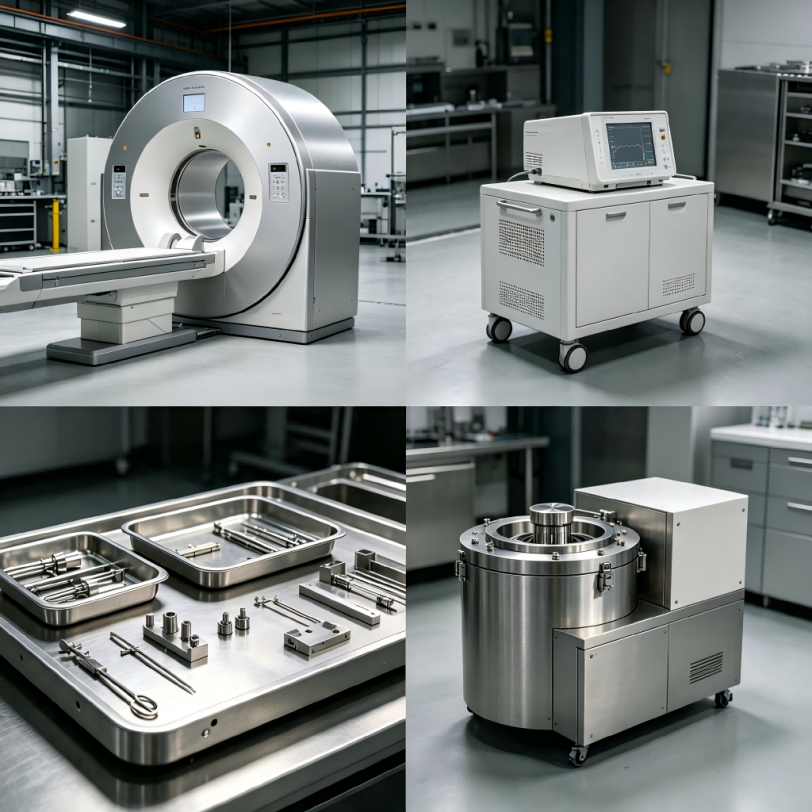
Enclosures for diagnostic equipment such as MRI machines, CT scanners, and ultrasound devices require high structural integrity and electromagnetic compatibility (EMC) shielding.
Patient Monitoring Systems
Enclosures for patient monitors, ECG machines, and vital signs monitors must be compact, durable, and easy to clean.
Surgical Instruments
Surgical tool enclosures and instrument trays require precise tolerances and smooth, crevice‑free surfaces to prevent contamination.
Laboratory and Research Equipment
Enclosures for centrifuges, analyzers, and laboratory instruments must withstand chemical exposure and provide reliable protection for sensitive components.
How Lingyufab Supports Medical Device Manufacturing
Lingyufab is a professional sheet metal fabrication manufacturer and sheet metal supplier based in Shanghai, China, with over 20 years of precision manufacturing experience since 2003. We follow strict Japanese quality standards and are a certified core supplier for Mitsubishi Electric.
What sets Lingyufab apart as a sheet metal supplier is our systematic approach to medical device manufacturing:
• Material traceability — Every batch of raw materials comes with a Mill Test Certificate (MTC), ensuring full traceability and compliance
• Surface quality — We maintain strict surface finish standards to meet medical device cleanliness requirements
• Welding quality — Our skilled welders produce smooth, defect‑free welds with no crevices or porosity
• Documentation — Full quality documentation available upon request
• Quality system — ISO 9001, ISO 14001, and TÜV CE certified
Our in‑house capabilities include:
• Laser cutting — High‑precision cutting for accurate flat patterns.
• CNC bending — Precision bending with consistent accuracy.
• Laser welding— High‑speed, low‑distortion welding.
• Sheet metal fabrication — Complete assembly, surface treatment, and fastener installation.
• ISO 9001, ISO 14001, and TÜV CE certified.
• Full material traceability with Mill Test Certificates.
One supplier, full responsibility. From laser cutting and CNC bending to welding, surface treatment, and fastener installation, we handle everything under one roof. This integration ensures consistent quality, shorter lead times, and a single point of accountability for your entire project.
If you are developing medical device enclosures and need a manufacturing partner who understands the stringent quality requirements of the healthcare industry, our engineering team is available to review your requirements and provide a free consultation. If you are looking for a reliable sheet metal fabrication supplier for medical applications, please don't hesitate to contact us.
Quick Medical Device Enclosure Checklist for Buyers
| What to Check | What to Consider |
|---|---|
| Material type | Stainless steel (304/316) or aluminum—each has different properties and costs |
| Surface finish | Ra ≤ 0.8μm for visible surfaces; all edges deburred |
| Welding quality | Smooth, defect-free welds with no crevices or porosity |
| Traceability | Material certifications and process documentation available |
| Regulatory compliance | ISO 13485, FDA 21 CFR Part 820, IEC 60601-1 |
| Supplier capability | Does the supplier have experience with medical device manufacturing? |
FAQs
Q1: What material is most commonly used for medical device enclosures?
Stainless steel—particularly 304 and 316 grades—is the most common material due to its excellent corrosion resistance, cleanability, durability, and biocompatibility. It withstands harsh cleaning chemicals and sterilization processes without degradation.
Q2: Why is surface finish important for medical enclosures?
Medical enclosures must have smooth, burr‑free surfaces to prevent contamination and allow effective cleaning. Rough surfaces or crevices can harbor bacteria and compromise sterilization. Surface roughness is typically specified as Ra ≤ 0.8μm for visible surfaces.
Q3: What welding standards apply to medical device enclosures?
Welds must be smooth, continuous, and free of defects. In medical devices, weld quality is critical for cleanliness—porosity or crevices can trap contaminants and bacteria. Stainless steel welding requires careful control to maintain corrosion resistance.
Q4: What is ISO 13485 and why does it matter?
ISO 13485 is the international standard for quality management systems in medical device manufacturing. It specifies requirements for design, development, production, installation, and servicing of medical devices. Compliance demonstrates a supplier’s commitment to quality and patient safety.
Q5: Can Lingyufab meet medical device quality requirements?
Yes. Lingyufab follows strict quality controls including material traceability with MTCs, surface finish standards, and documentation. We are ISO 9001, ISO 14001, and TÜV CE certified, and our processes are aligned with the quality requirements of the medical industry.
Q6: What file formats do you accept for medical enclosure projects?
We accept 3D files in STEP (.stp), IGS (.igs), and SolidWorks (.sldprt) formats, and 2D drawings in PDF, DWG, and DXF formats. For medical projects, we also need material specifications, surface finish requirements, and any regulatory compliance requirements.